Treating Shoulder Pain with Physical Therapy and Rehabilitation
 Dr. Bob Vaughn
Shoulder pain has a way of affecting nearly everything you do — from reaching into a cupboard to sleeping comfortably at night. Whether you've been dealing with a nagging ache after a workout or a sharp pain that showed up seemingly out of nowhere, shoulder discomfort is one of the most common complaints we hear from patients here in Blaine, MN. The good news is that many people find meaningful relief through conservative, non-invasive care — and that's exactly what this article is about. We want to help you understand your shoulder, what might be causing your pain, and how physical therapy and rehabilitation can be a powerful path forward.
What does it mean to treat shoulder pain with physical therapy and rehabilitation?
Treating shoulder pain with physical therapy and rehabilitation means using targeted movement, guided exercises, manual therapies, and lifestyle education to restore function, reduce discomfort, and prevent future injury — without surgery or medication. It's a hands-on, whole-body approach designed to address the root cause of your pain rather than just masking symptoms.
- Understanding Shoulder Pain
- Common Causes of Shoulder Pain
- Signs and Symptoms Worth Paying Attention To
- How Chiropractic Care and Rehabilitation Fit In
- Practical Tips for Shoulder Health at Home
- When to See a Chiropractor for Shoulder Pain
Understanding Shoulder Pain: More Complex Than You Might Think
The shoulder is one of the most mobile joints in the entire human body. That extraordinary range of motion — the ability to reach overhead, behind your back, and across your body — is made possible by a complex system of bones, muscles, tendons, ligaments, and bursa sacs all working in harmony. The shoulder joint is technically called a ball-and-socket joint, formed where the head of the upper arm bone (humerus) meets the shoulder blade (scapula).
Because so many structures are involved, shoulder pain rarely has a single simple explanation. Pain can originate from the rotator cuff muscles, the biceps tendon, the joint capsule, or even from the neck and upper back. That's part of what makes proper evaluation so important. At Catalyst Chiropractic And Rehab in Blaine, MN, Dr. Bob Vaughn takes a thorough look at the entire kinetic chain — meaning the shoulder doesn't get evaluated in isolation. The neck, upper back, and even posture all play a role.
Many patients are surprised to learn that what feels like a shoulder problem might actually be originating somewhere else entirely. Nerves from the cervical spine (neck) travel all the way down the arm, and irritation in those nerves can mimic shoulder pain closely. This is exactly why a careful examination matters before beginning any treatment plan.
Common Causes of Shoulder Pain
Shoulder pain can develop gradually over time or appear suddenly after an injury. Here in Blaine, MN, we see a wide range of patients — from desk workers dealing with postural strain to weekend athletes who overdid it on the golf course or pickleball court. While the causes vary widely, some patterns show up again and again in clinical practice.
Rotator cuff injuries are among the most frequent culprits. The rotator cuff is a group of four muscles and their tendons that surround the shoulder joint and keep the arm bone firmly in place. Overuse, poor mechanics, or sudden trauma can cause these tendons to become inflamed (tendinitis) or even torn. Rotator cuff issues often cause pain when lifting the arm overhead or reaching behind the back.
Shoulder impingement syndrome is another extremely common presentation. This occurs when the tendons of the rotator cuff become compressed, or "pinched," between the bones during arm movement. Poor posture — especially rounded shoulders and a forward head position — dramatically increases the likelihood of impingement developing over time.
Frozen shoulder, also known as adhesive capsulitis, is a condition where the capsule surrounding the shoulder joint becomes thickened and tight, leading to a significant loss of motion and persistent pain. It often develops slowly and can be quite limiting. Bursitis, biceps tendinitis, and labrum tears are other common diagnoses that bring patients through our doors seeking conservative care options.
Signs and Symptoms Worth Paying Attention To
Shoulder pain presents differently from person to person, but there are some hallmark signs that something is off and deserves professional attention. Persistent aching that lasts more than a week or two is worth evaluating. Pain that wakes you up at night — especially when lying on the affected side — is a common complaint with rotator cuff issues. Weakness when lifting your arm or difficulty reaching overhead can indicate tendon or muscle involvement.
Stiffness and a reduced range of motion are also important signals. If you notice that your shoulder doesn't move as freely as it once did, or that certain movements provoke sharp pain, those are clues that the joint, muscles, or surrounding soft tissue are under stress. Numbness or tingling that travels down the arm toward the hand may indicate nerve involvement and warrants prompt evaluation.
What many patients don't realize is that early intervention often leads to much better outcomes. Waiting and hoping shoulder pain resolves on its own can allow compensatory patterns to develop — where the body starts moving differently to avoid pain — and those patterns can create entirely new problems in the neck, upper back, or even the opposite shoulder.
How Chiropractic Care and Rehabilitation Fit In
When most people think of chiropractic care, they think of the spine. And while spinal health is a central focus, chiropractors who specialize in rehabilitation — like Dr. Bob Vaughn at Catalyst Chiropractic And Rehab — are highly trained in evaluating and treating extremity joints as well. Shoulder rehabilitation is a natural extension of a comprehensive, movement-based approach to care.
Chiropractic adjustments to the shoulder, upper back, and cervical spine can help restore proper joint mechanics, reduce nerve irritation, and improve the overall movement patterns that contribute to shoulder pain. When the thoracic spine (mid-back) is stiff and restricted, for example, it places extra demand on the shoulder joint. Addressing those restrictions can meaningfully take the load off an already irritated shoulder.
Soft tissue therapies are also a key part of rehabilitation at Catalyst Chiropractic And Rehab. Techniques that work on the muscles, fascia, and tendons around the shoulder can help break up adhesions, reduce scar tissue formation, and improve circulation to the area. These therapies are often used in combination with joint mobilization for a more complete approach to healing.
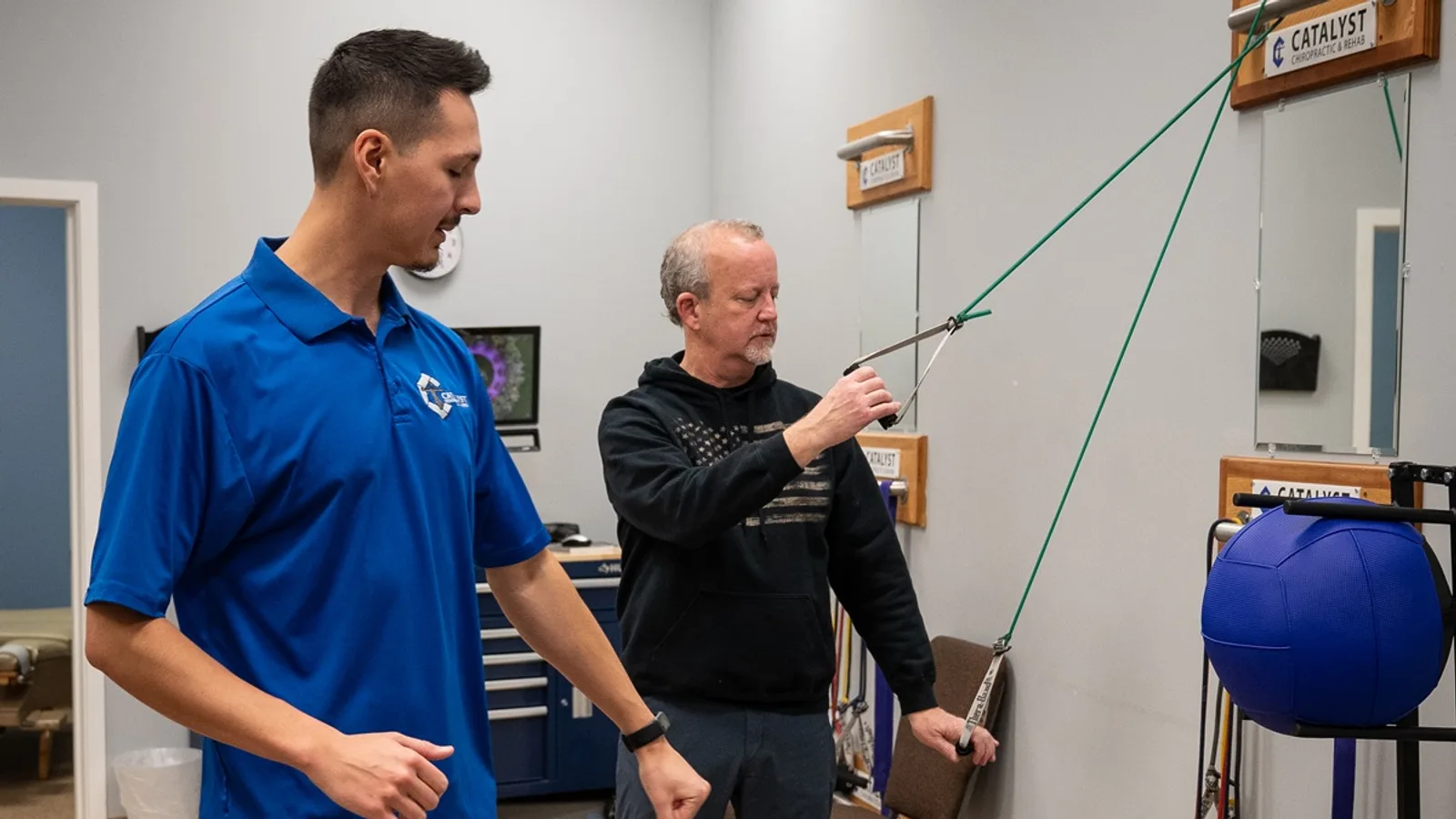
The rehabilitation exercise component is especially important for shoulder recovery. Research suggests that targeted therapeutic exercise is one of the most effective tools available for restoring strength, stability, and function to an injured shoulder. Dr. Bob Vaughn works with patients to build individualized exercise programs that progress gradually — meeting patients where they are and building capacity over time. The goal isn't just to feel better today; it's to build a shoulder that is resilient and functional for the long haul.
Evidence from organizations like the National Institutes of Health and the American College of Physicians consistently supports conservative, rehabilitation-based care as a first-line approach for most musculoskeletal shoulder conditions. That means trying non-invasive care before considering surgery or relying on medication — and many patients are relieved to discover how effective this approach can be.
Practical Tips for Shoulder Health at Home
While professional care is essential for a proper diagnosis and guided treatment plan, there are several things you can do at home to support your shoulder health and complement the work being done in the clinic. These are general wellness habits grounded in good biomechanical principles.
Posture awareness is one of the most impactful things you can change. If you spend long hours at a desk, take regular breaks to move and reset your posture. Rolling the shoulders back gently and drawing the shoulder blades together periodically throughout the day can help counteract the forward-rounding posture that contributes to impingement and muscle imbalance.
Sleep position matters more than most people realize. Sleeping on the affected shoulder compresses already irritated tissues. If you're a side sleeper, try sleeping on the unaffected side with a supportive pillow between your arms, or try sleeping on your back with a pillow supporting the arm in a neutral position.
Avoid overhead activities that provoke sharp pain, at least until the shoulder has been properly evaluated and a care plan is in place. Pushing through sharp pain is rarely productive and can delay healing. Gentle, pain-free movement, however, is generally beneficial and helps maintain circulation and tissue health.
When to See a Chiropractor for Shoulder Pain
A good general guideline: if shoulder pain has persisted for more than one to two weeks, is limiting your daily activities, or is affecting your sleep, it's time to get evaluated. You don't have to wait until you're in severe pain to seek care. In fact, addressing issues early tends to result in faster and more complete recovery.
Dr. Bob Vaughn and the team at Catalyst Chiropractic And Rehab in Blaine, MN are well-versed in distinguishing the many causes of shoulder pain and building appropriate, individualized care plans. The first step is always a thorough assessment — listening to your history, understanding your daily demands, and conducting a hands-on examination to identify what's actually driving your symptoms.
There are, however, certain situations where chiropractic care alone is not the right first step — and knowing these red flags is important. Seek emergency medical care if shoulder pain follows a traumatic injury and is accompanied by visible deformity, if you're experiencing severe swelling or bruising that develops rapidly, or if pain is accompanied by chest tightness, shortness of breath, or pain radiating down the left arm (which can be cardiac in nature). These situations warrant immediate medical evaluation.
| Condition / Symptom | Common Trigger or Contributing Factor | How Rehab May Help |
|---|---|---|
| Rotator Cuff Tendinitis | Overuse, repetitive overhead activity, poor posture | Strengthening exercises, soft tissue therapy, postural correction |
| Shoulder Impingement | Rounded shoulders, tight chest muscles, weak rotator cuff | Chiropractic adjustments, targeted strengthening, mobility work |
| Frozen Shoulder | Prolonged immobility, inflammation, post-surgical stiffness | Joint mobilization, guided stretching, gradual range of motion restoration |
| Biceps Tendinitis | Repetitive lifting, poor mechanics, age-related degeneration | Soft tissue work, activity modification, eccentric loading exercises |
| Bursitis | Friction from repetitive movement, postural strain | Inflammation management, movement re-education, posture training |
Myths vs. Facts About Shoulder Pain and Rehabilitation
Myth: Rest is always the best medicine for shoulder pain.
Fact: While rest can be appropriate in the acute phase of an injury, prolonged rest often leads to stiffness, muscle weakness, and delayed recovery. Evidence consistently supports early, guided movement and rehabilitation as more effective for most shoulder conditions than extended rest alone.
Myth: If it hurts, it must need surgery.
Fact: The vast majority of shoulder pain conditions — including many rotator cuff injuries and cases of impingement — respond well to conservative, non-surgical care. Research suggests that physical therapy and chiropractic rehabilitation are effective first-line treatments for most people with shoulder pain.
Myth: Shoulder pain is just a normal part of getting older and nothing can be done.
Fact: While some degenerative changes do occur with age, they are not necessarily the source of pain, and they don't mean you're stuck. Many older adults experience significant improvement in shoulder function and comfort with appropriate rehabilitation and care.
Myth: Chiropractic care is only for back pain.
Fact: Chiropractors trained in rehabilitation care for a wide range of musculoskeletal conditions, including shoulder, hip, knee, and elbow issues. At Catalyst Chiropractic And Rehab, treating extremity joints is a routine and important part of what the team does every day.
Myth: You need imaging (X-rays or MRI) before starting care.
Fact: Imaging can be helpful in certain situations, but it is not always necessary before beginning conservative care. A thorough clinical examination often provides enough information to begin an appropriate rehabilitation program safely.
Final Thoughts from Catalyst Chiropractic And Rehab in Blaine, MN
Shoulder pain doesn't have to define your daily life. Whether you're struggling to pick up your grandchildren, swing a golf club, or simply sleep through the night without discomfort, there is real hope in a thoughtful, evidence-informed rehabilitation approach. Here at Catalyst Chiropractic And Rehab, our goal is to help the people of Blaine and the surrounding community move better, feel stronger, and live with less pain.
Dr. Bob Vaughn is passionate about working with patients one-on-one to understand not just the injury, but the whole person — their lifestyle, their goals, and their unique movement patterns. That personalized attention is what makes rehabilitation genuinely effective rather than a one-size-fits-all approach.
If you've been putting off addressing your shoulder pain, we encourage you to take that first step toward getting answers. The right care, started at the right time, can make a tremendous difference. The team at Catalyst Chiropractic And Rehab in Blaine, MN is here to help you get there.
Frequently Asked Questions About Shoulder Pain and Rehabilitation
How long does it take to recover from shoulder pain with chiropractic rehabilitation?
Recovery time varies depending on the specific condition, its severity, and how long it's been present. Some patients notice improvement within a few weeks of consistent care, while more chronic or complex conditions may take longer. Dr. Bob Vaughn can give you a more realistic timeline after a thorough evaluation.
Can chiropractic care help with a rotator cuff injury?
Yes, chiropractic care and rehabilitation are commonly used as conservative management tools for rotator cuff injuries. Depending on the severity of the injury, a combination of soft tissue therapy, joint mobilization, and targeted exercise can support healing and restore function without surgery.
Is it safe to exercise with shoulder pain?
It depends on the type and cause of the pain. Some gentle, pain-free movement is generally beneficial, while other exercises could aggravate the condition. This is why getting a proper evaluation before starting or continuing an exercise program is so important — the right movements become a central part of the healing process.
What's the difference between physical therapy and chiropractic rehabilitation?
There is significant overlap between the two. Chiropractic rehabilitation integrates the hands-on joint manipulation and adjustment skills of chiropractic care with therapeutic exercise and movement rehabilitation. At Catalyst Chiropractic And Rehab, the approach blends these disciplines to address both joint function and muscular strength and stability.
Can poor posture really cause shoulder pain?
Absolutely. Forward head posture and rounded shoulders alter the mechanics of the shoulder joint, reducing the space where tendons move and increasing the likelihood of impingement and muscle imbalance. Correcting posture is a key component of most shoulder rehabilitation programs.
Do I need a referral to see Dr. Bob Vaughn at Catalyst Chiropractic And Rehab?
In most cases, you do not need a referral to see a chiropractor. Chiropractic care is considered a primary contact profession, meaning patients can seek care directly. It's always a good idea to check with your insurance provider regarding your specific coverage details.
TL;DR — Key Takeaways
- Shoulder pain is complex and can stem from rotator cuff issues, impingement, frozen shoulder, bursitis, and more — proper evaluation is essential before starting treatment.
- Physical therapy and chiropractic rehabilitation offer a proven, non-invasive approach to treating shoulder pain by addressing root causes rather than just symptoms.
- Dr. Bob Vaughn at Catalyst Chiropractic And Rehab in Blaine, MN provides individualized care plans that combine joint mobilization, soft tissue therapy, and therapeutic exercise.
- Early intervention and consistent rehabilitation typically lead to better outcomes — don't wait until the pain is unbearable to seek care.
- Red flags like pain accompanying chest tightness or visible deformity after trauma require immediate medical attention rather than chiropractic care.