The Role of Posture in Preventing and Treating Back Pain with Chiropractic Care
 Dr. Bob Vaughn
If you’ve ever caught yourself slouching at your desk or craning your neck over your phone, you’re not alone. Poor posture has become one of the most common — and most overlooked — contributors to back pain in our modern, screen-heavy world. The good news is that understanding the connection between posture and back pain is one of the most empowering steps you can take toward a healthier spine. Here at Catalyst Chiropractic And Rehab in Blaine, MN, we work with patients every day who are surprised to learn just how big a role their daily posture habits play in the discomfort they’re experiencing. Whether your back pain is brand new or something you’ve been managing for years, this article will help you understand why posture matters, what you can do about it, and how chiropractic care fits into the picture.
What Is the Connection Between Posture and Back Pain?
Posture and back pain are deeply linked through the mechanics of the spine. When your body is properly aligned, your spine distributes the forces of gravity evenly across its structures. When posture breaks down — whether from sitting too long, looking down at a phone, or carrying uneven loads — those forces shift onto muscles, joints, and discs in ways they were never designed to handle. Over time, this uneven stress leads to muscle fatigue, joint irritation, and pain.
Why Posture Matters More Than You Think
Most people think of posture as something their parents nagged them about — “sit up straight!” — but it’s actually a complex interaction between your bones, muscles, ligaments, and nervous system. Good posture means your spine maintains its three natural curves: a gentle inward curve at the neck (cervical lordosis), an outward curve at the mid-back (thoracic kyphosis), and another inward curve at the lower back (lumbar lordosis). These curves work together like a spring to absorb shock and support movement.
When those curves are disrupted — flattened, exaggerated, or shifted sideways — your body has to compensate. Muscles on one side work harder while others weaken. Joints carry loads at unnatural angles. Nerves can become compressed or irritated. It’s a chain reaction, and it often ends with back pain, neck stiffness, headaches, or even radiating discomfort down the arms or legs.
Here in Blaine, MN, a significant portion of the patients Dr. Bob Vaughn sees at Catalyst Chiropractic And Rehab work desk jobs, spend long hours commuting, or are students who are on devices for much of the day. These are exactly the types of daily habits that slowly chip away at good posture — often without any warning signs until the pain becomes hard to ignore.
What makes this especially important is that poor posture doesn’t just cause pain. Research suggests it can also affect breathing efficiency, digestive comfort, mood, and energy levels. The spine houses the spinal cord — a critical highway for your nervous system — so keeping it aligned isn’t just about avoiding back pain. It’s about supporting your overall health.
Common Posture Mistakes That Lead to Back Pain
Understanding where posture goes wrong is the first step toward changing it. The most common postural patterns that contribute to back pain tend to fall into a few recognizable categories, and chances are, you’ll recognize at least one of them in your own life.
Forward head posture is one of the most widespread issues we see today. For every inch your head moves forward of your shoulders, it effectively adds extra pounds of stress on your cervical spine. When you’re looking down at a phone or hunching toward a computer screen, this is exactly what’s happening. The strain travels down into the upper and mid-back, causing tension and discomfort that many people misattribute to stress alone.
Prolonged sitting is another major contributor. Sitting compresses the lumbar discs more than standing does, and when you sit with a rounded low back — which most of us do when we get tired — that pressure increases even further. The hip flexors also tighten with prolonged sitting, pulling on the lumbar spine and contributing to lower back pain even when you’re back on your feet.
Uneven weight distribution is something Dr. Bob Vaughn frequently identifies during postural assessments at Catalyst Chiropractic And Rehab. Habitually carrying a heavy bag on one shoulder, consistently crossing the same leg, or always sleeping on one side can create muscular imbalances that gradually skew the alignment of the entire spine.
Improper lifting mechanics round out the list. Bending at the waist instead of the knees, twisting while carrying heavy loads, or repeatedly reaching overhead without proper core engagement all place dangerous stress on spinal structures — often resulting in acute injuries on top of a spine that’s already been compromised by chronic poor posture.
Signs That Poor Posture May Be Behind Your Pain
Back pain is not always straightforward. It can be achy or sharp, constant or intermittent, localized or radiating. But there are some patterns that strongly suggest posture is playing a significant role in what you’re feeling.
If your pain tends to worsen after sitting for long periods and improve when you get up and move around, that’s a classic sign of postural stress on the lumbar spine. Similarly, if you notice stiffness that’s worst in the morning but loosens up within the first hour of your day, your resting posture during sleep may be contributing to the problem.
Tension in the upper back, between the shoulder blades, combined with neck stiffness and headaches at the base of the skull is often tied to forward head posture and rounded shoulders from desk work or device use. When pain radiates into the arms or legs, it may indicate that nerve roots are being compressed — which can happen when postural dysfunction leads to disc or joint changes in the spine.
One of the most telling signs is asymmetry. If you or someone else notices that one of your shoulders sits higher than the other, that one hip appears more forward, or that you lean to one side when you stand or walk, these are visible signs of postural imbalance that deserve a professional evaluation.
How Chiropractic Care Addresses Posture and Back Pain
Chiropractic care is uniquely positioned to address both the symptoms of back pain and the underlying postural issues that drive it. Rather than masking pain with medication, chiropractic focuses on restoring proper alignment, improving joint mobility, and supporting the body’s natural ability to heal and function well.
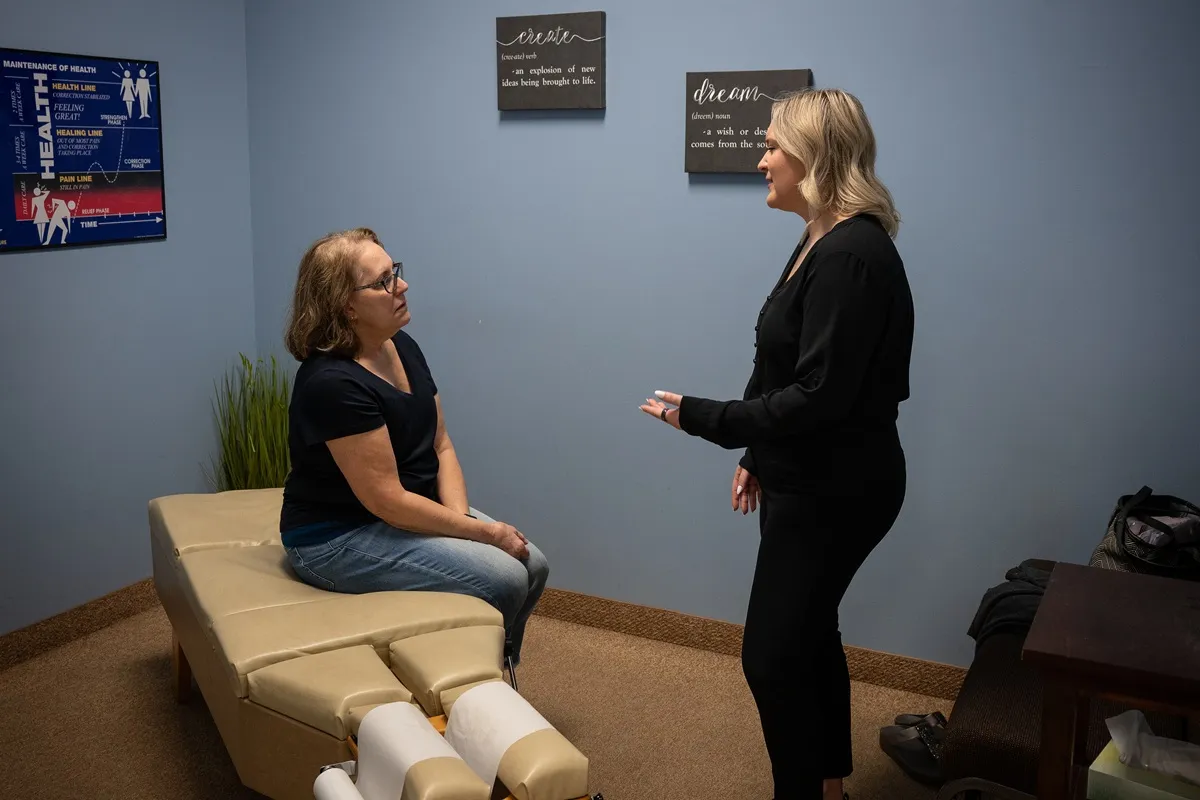
At Catalyst Chiropractic And Rehab, Dr. Bob Vaughn begins with a thorough evaluation that includes a postural assessment, movement analysis, and a careful review of your history and symptoms. This helps identify not just where you hurt, but why — including any underlying spinal misalignments (called subluxations in chiropractic terminology) that may be contributing to your pain and postural breakdown.
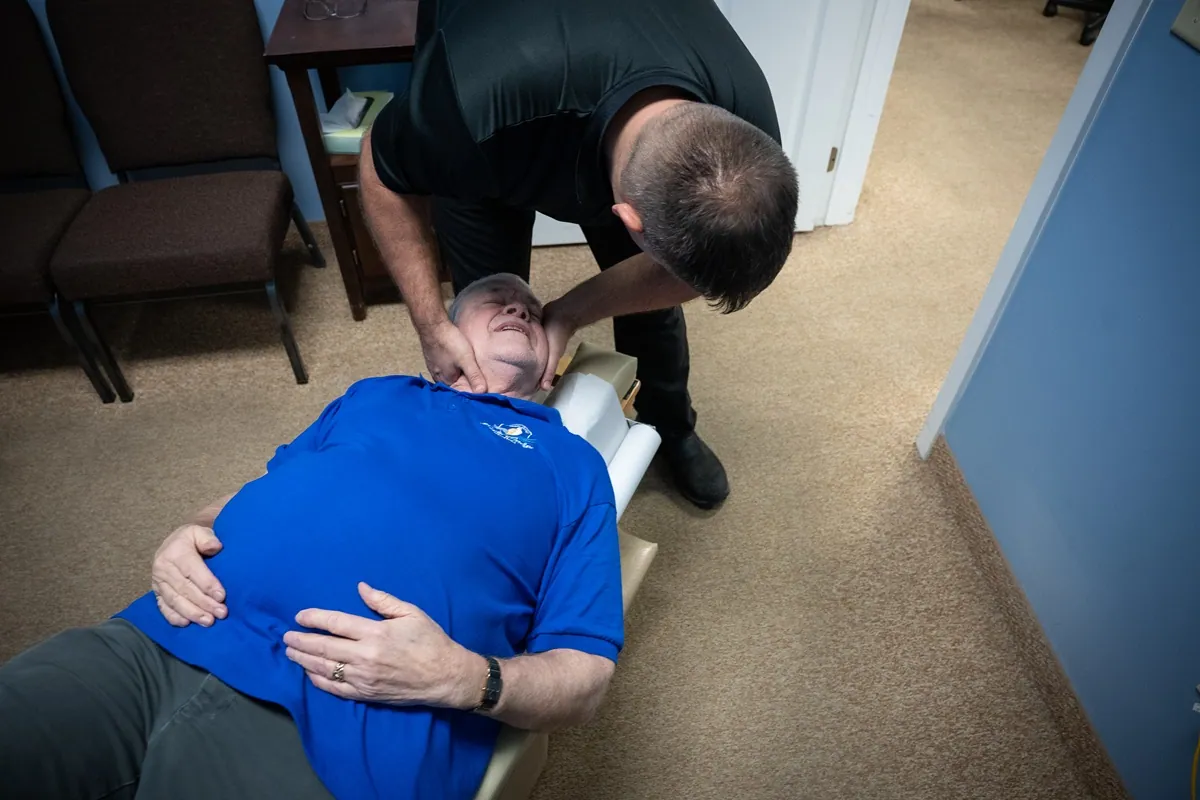
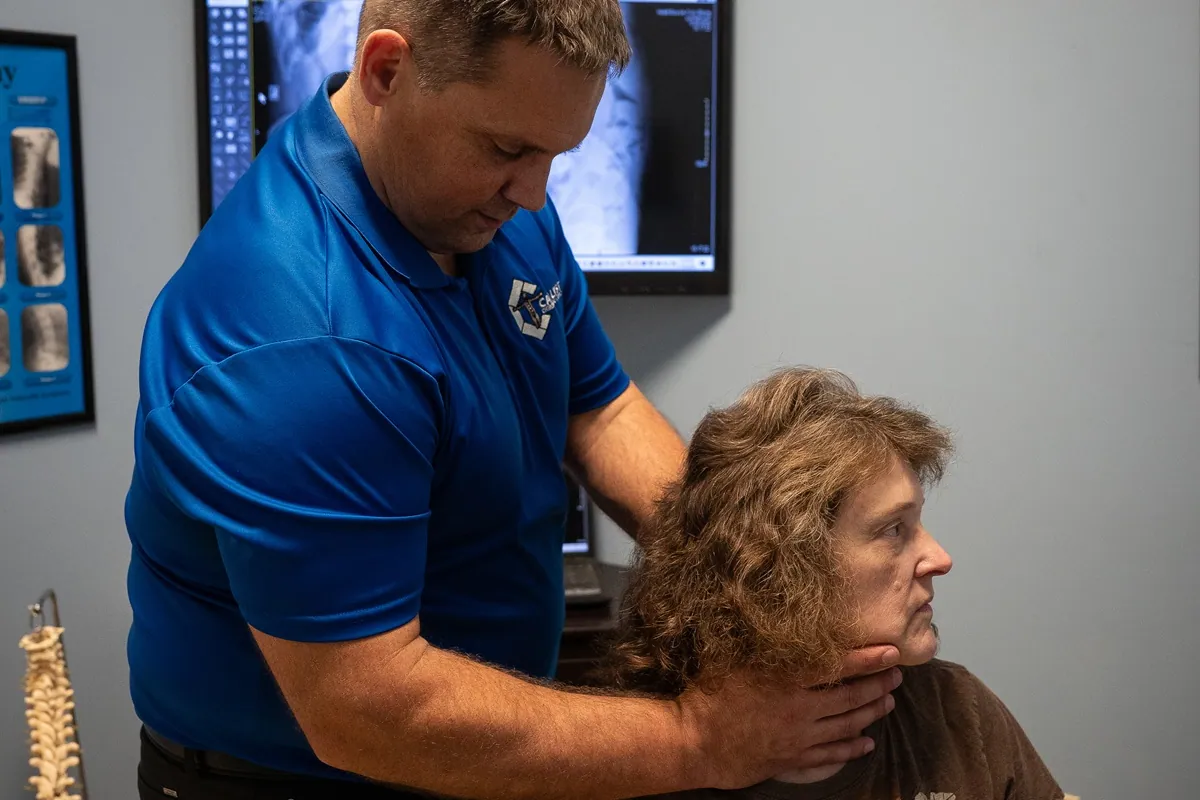
Chiropractic adjustments involve the gentle, specific application of force to spinal joints to restore their normal range of motion and reduce nerve irritation. When joints move freely and the spine is properly aligned, the muscles around it can relax and work more efficiently — which directly improves posture over time. Evidence from organizations including the American Chiropractic Association and NIH’s National Center for Complementary and Integrative Health indicates that chiropractic care has been shown to help with back pain as part of a conservative, non-invasive treatment approach.
Beyond adjustments, care at Catalyst Chiropractic And Rehab often includes rehabilitative exercises designed to strengthen the muscles that support good posture — particularly the deep core stabilizers and the muscles of the upper back that counteract forward head posture. Soft tissue therapies may also be used to address muscle tightness and trigger points that perpetuate poor postural habits.
This combination of hands-on care and patient education is what makes chiropractic such a valuable part of a long-term postural correction plan. Dr. Bob Vaughn’s goal isn’t just to get you out of pain — it’s to help you understand your body well enough to maintain the improvements you’ve worked for.
Practical Tips for Better Posture Every Day
Improving your posture doesn’t require an overhaul of your entire life. Small, consistent changes made throughout the day can have a meaningful impact on how your spine feels and functions. Here are some of the most effective and evidence-aligned recommendations we share with patients at Catalyst Chiropractic And Rehab.
Set up your workspace intentionally. Your monitor should be at eye level so you’re not looking down or craning upward. Your chair should support the natural curve of your lower back, with your feet flat on the floor and your knees at roughly a 90-degree angle. Your keyboard and mouse should be positioned so your arms can rest comfortably at your sides without reaching forward.
Break up your sitting time. One of the most effective things you can do for your spine is simply to stand up and move for a few minutes every 30 to 45 minutes. Set a timer if you need to. Even a short walk to the kitchen or a few gentle standing stretches gives your spinal discs a chance to rehydrate and your muscles a chance to reset.
Strengthen your core regularly. Your core muscles — which include far more than just your abdominals — act as an internal brace for your spine. When they’re weak, your spine has to compensate, and posture suffers. Exercises like dead bugs, bird dogs, and planks are commonly recommended in chiropractic rehabilitation settings because they build deep stability without straining the spine.
Be mindful of your phone habits. Rather than dropping your chin to look at your phone, try raising the phone to eye level. It feels awkward at first, but it dramatically reduces the strain on your cervical spine. Even reducing your total screen time each day can make a noticeable difference.
When to See a Chiropractor for Back Pain
If your back pain has lasted more than a few days without improvement, or if it’s recurring regularly, that’s a good sign it’s time to get a professional evaluation. You don’t need to be in severe pain to benefit from chiropractic care — in fact, catching postural problems early makes them much easier to correct.
Dr. Bob Vaughn and the team at Catalyst Chiropractic And Rehab in Blaine, MN, encourage patients to come in sooner rather than later. Many people wait until their pain is debilitating, but the truth is that addressing the underlying postural dysfunction early on tends to lead to faster, more lasting results.
That said, there are certain symptoms that warrant immediate medical attention rather than waiting for a chiropractic appointment. These include back pain accompanied by loss of bladder or bowel control, numbness in the groin or inner thighs, severe pain following a significant trauma such as a fall or car accident, or unexplained weight loss alongside back pain. These are red flag symptoms that should be evaluated by a medical doctor right away.
Posture Habits: What Helps vs. What Hurts Your Spine
Posture Habit | What Hurts Your Spine | What Helps Your Spine |
|---|---|---|
Screen Position | Monitor below eye level, chin dropped forward | Monitor at eye level, ears over shoulders |
Sitting Posture | Rounded low back, slouched shoulders | Lumbar support maintained, feet flat on floor |
Phone Use | Head down, neck flexed for extended periods | Phone raised to eye level, breaks taken often |
Lifting | Bending at the waist, twisting under load | Bending at knees, keeping load close to body |
Sleep Position | Stomach sleeping, unsupportive pillow | Side or back sleeping with proper pillow height |
Daily Movement | Sitting for hours without breaks | Standing and moving every 30–45 minutes |
Myths vs. Facts About Posture and Back Pain
Myth: Back pain is just a normal part of getting older.
Fact: While the risk of certain spinal conditions does increase with age, chronic back pain is not an inevitable consequence of aging. Much of what people attribute to age is actually the cumulative effect of years of poor posture, sedentary habits, and untreated biomechanical issues. Addressing these factors at any age can lead to meaningful improvement.
Myth: If you’re not in severe pain, your posture is probably fine.
Fact: Postural dysfunction often develops silently over months or years before it produces noticeable pain. By the time pain becomes significant, the underlying imbalances may already be well established. Regular postural assessments — even when you feel fine — can catch problems before they become painful.
Myth: Chiropractic adjustments are only a temporary fix.
Fact: When chiropractic care is combined with rehabilitative exercise, ergonomic education, and consistent healthy habits, the improvements in posture and pain can be long-lasting. A single adjustment doesn’t “fix” posture permanently, but a comprehensive care plan that includes lifestyle changes is designed to create durable results.
Myth: Sitting up perfectly straight all day is the goal.
Fact: Rigid, forced “perfect” posture can actually fatigue your muscles faster than relaxed, supported posture. The real goal isn’t to be militarily stiff — it’s to keep your spine in a comfortable, supported neutral position and to change positions frequently throughout the day. Movement is as important as alignment.
Myth: You need an MRI or X-ray before seeing a chiropractor.
Fact: In most cases, imaging is not required before a chiropractic evaluation. Chiropractors are trained to assess posture, movement, and neurological function through clinical examination. Imaging may be ordered when specific red flags are present, but it’s not a prerequisite for starting care.
Final Thoughts from Catalyst Chiropractic And Rehab
Back pain doesn’t have to be something you just live with. More often than not, there are real, identifiable reasons why your back hurts — and posture is one of the most common and correctable ones. The relationship between how you hold yourself and how your spine feels is something that can be assessed, addressed, and genuinely improved with the right approach.
Here in Blaine, MN, the team at Catalyst Chiropractic And Rehab is committed to helping members of our community not just feel better, but understand their bodies well enough to stay better. Dr. Bob Vaughn takes a thorough, individualized approach to every patient — because no two spines, and no two posture stories, are exactly alike.
If back pain or postural concerns have been affecting your quality of life, we encourage you to reach out and schedule an evaluation. You deserve to move through your day with confidence and comfort, and we’re here to help make that possible.
Frequently Asked Questions
Can chiropractic care actually improve my posture, or does it just treat pain?
Chiropractic care addresses both. By restoring proper spinal alignment and joint mobility, adjustments create the physical foundation for better posture. When combined with rehabilitative exercises and patient education, chiropractic care can lead to lasting postural improvements — not just temporary pain relief.
How long does it take to correct poor posture?
It depends on how long the postural habits have been in place and the severity of any underlying spinal dysfunction. Mild postural issues may respond relatively quickly, while long-standing patterns typically take longer to correct. Dr. Bob Vaughn will give you a realistic timeline after your initial evaluation at Catalyst Chiropractic And Rehab.
Is back pain from poor posture different from a back injury?
They can overlap significantly. Poor posture doesn’t always cause a dramatic, acute injury — instead, it tends to create a gradual buildup of stress that eventually results in pain. However, a spine already compromised by poor posture is also more vulnerable to acute injury when subjected to sudden forces like a wrong move or a fall.
Do I need to see a chiropractor regularly to maintain good posture?
Not necessarily. Many patients find that an initial course of care followed by periodic check-ups, combined with their own daily habits and exercises, is enough to maintain results. Dr. Bob Vaughn will help you develop a maintenance plan that fits your lifestyle and goals.
At what age should someone start thinking about posture correction?
It’s never too early or too late. Children and teenagers are increasingly developing forward head posture from device use, while adults often accumulate decades of desk-related dysfunction. Chiropractic care and postural education are appropriate and beneficial at essentially any age.
Can sleeping position affect my back pain and posture?
Absolutely. Sleeping on your stomach, for example, forces the neck into rotation for hours at a time and flattens the lumbar curve — both of which contribute to postural stress. Side sleeping with a supportive pillow that keeps the neck neutral, or back sleeping with a pillow under the knees, tends to be much more spine-friendly.
TL;DR — Key Takeaways
Poor posture disrupts the spine’s natural curves and is one of the most common contributors to back pain — often developing silently over time before pain appears.
Common culprits include forward head posture, prolonged sitting with a rounded low back, uneven weight distribution, and poor lifting mechanics.
Chiropractic care at Catalyst Chiropractic And Rehab in Blaine, MN addresses both the pain and the underlying postural dysfunction through spinal adjustments, rehabilitative exercise, and patient education.
Simple daily habits — like raising your phone to eye level, taking movement breaks every 30–45 minutes, and setting up an ergonomic workspace — can meaningfully reduce postural stress on your spine.
If back pain has persisted for more than a few days or keeps coming back, it’s worth scheduling an evaluation with Dr. Bob Vaughn to identify the root cause and build a plan that works for your life.