

Arm pain can be one of those nagging, frustrating experiences that creeps into everyday life and makes even the simplest tasks feel like a challenge. Whether it shows up as a dull ache after a long day at the desk, a sharp shooting sensation down your forearm, or tingling and numbness in your fingers, arm pain deserves attention — not just a shrug and another dose of over-the-counter pain reliever. Here at Catalyst Chiropractic And Rehab in Blaine, MN, Dr. Bob Vaughn works with patients every week who are tired of living with arm pain and are looking for real, lasting answers. If that sounds like you, keep reading — because understanding what’s behind your arm pain is the first step toward feeling better.
What Is Arm Pain, and Why Does It Happen?
Arm pain refers to any discomfort, aching, burning, numbness, or weakness felt anywhere from the shoulder down to the fingers. It can stem from a problem in the arm itself, or — surprisingly — from an issue originating in the neck or upper back. Because the nerves that power your arm travel all the way from your cervical spine, a misalignment or irritation higher up the chain can absolutely show up as pain, tingling, or weakness in your arm.
What Causes Arm Pain?
Arm pain rarely has just one cause, and that’s part of what makes it tricky to address without a proper evaluation. In general practice, Dr. Bob Vaughn sees arm pain that falls into a handful of common categories, each with its own origin and pattern of symptoms.
One of the most common culprits is cervical nerve compression — meaning a nerve in the neck is being pinched or irritated. This can happen when the vertebrae in your neck lose their proper alignment, when a disc bulges or herniates, or when degenerative changes in the spine narrow the spaces where nerves exit. When a cervical nerve is compromised, pain can radiate down the shoulder, arm, forearm, and even into specific fingers depending on which nerve is involved.
Repetitive strain injuries are another frequent cause. People who spend long hours typing, using a mouse, performing manual labor, or doing overhead work often develop irritation in the tendons, muscles, and soft tissues of the arm. Conditions like lateral epicondylitis (commonly called tennis elbow) or medial epicondylitis (golfer’s elbow) fall into this category.
Thoracic outlet syndrome is a condition where nerves or blood vessels become compressed between the collarbone and first rib. This can cause pain, numbness, and tingling that travels into the arm and hand, and it’s more common than many people realize. Poor posture, especially the rounded-shoulder posture so many of us develop from screen time, plays a major role here.
Shoulder joint problems — including rotator cuff injuries, bursitis, and adhesive capsulitis (frozen shoulder) — can also generate arm pain that radiates downward. And of course, direct trauma from falls, sports injuries, or accidents can cause acute arm pain from muscle strains, ligament sprains, or fractures.
Signs and Symptoms to Watch For
Arm pain can look and feel very different from person to person. Here in Blaine, MN, many patients who come to Catalyst Chiropractic And Rehab describe their symptoms in ways that don’t immediately sound like a spine or nerve issue — and that’s exactly why having an experienced clinician evaluate the full picture matters so much.
Some people experience a constant, dull ache that runs from the shoulder down to the elbow. Others feel a sharp, electric shock-like sensation that fires down the arm when they turn their head. Tingling or numbness in the fingers — particularly in specific fingers rather than the whole hand — is a classic sign of nerve involvement and should never be ignored.
Weakness in the arm or hand is another symptom worth taking seriously. If you’re finding it harder to grip objects, carry groceries, or perform fine motor tasks, that weakness may be neurological in origin. Muscle cramping, a sensation of coldness in the arm, or skin color changes can point toward vascular involvement and warrant prompt medical evaluation.
Pain that worsens with certain neck movements — looking up, turning to one side, or tilting the head — is a strong indicator that the cervical spine is contributing to the arm symptoms. This type of pattern is something Dr. Bob Vaughn is specifically trained to assess and address.
The Nerve Connection: Your Spine and Your Arm
To understand why a chiropractor can be so helpful for arm pain, it helps to understand a bit of anatomy. Your brain communicates with your arms through a network of nerves that exit the spinal cord between the vertebrae in your cervical spine — specifically C5 through T1. These nerves bundle together to form what’s called the brachial plexus, which then branches out to supply sensation and movement to every part of your arm and hand.
When any of those cervical vertebrae shift out of their optimal position — a state chiropractors refer to as a subluxation — the surrounding tissues can become inflamed and begin to compress or irritate the nearby nerve roots. The brain still tries to send signals, but they travel through a compromised pathway, producing the pain, tingling, weakness, or numbness you feel in your arm.
This is why two people with what seems like the same “arm pain” can actually have very different root causes. One person’s pain might originate at C6, producing symptoms in the thumb and index finger. Another person’s might originate at C7, causing symptoms more in the middle finger and triceps. Understanding which nerve is involved helps Dr. Bob Vaughn develop a care plan that targets the actual source of the problem rather than just managing symptoms.
How Chiropractic Care Fits In
Chiropractic care offers a non-surgical, drug-free approach to addressing the underlying causes of arm pain — especially when that pain has a spinal or neurological component. Rather than masking the pain, the goal at Catalyst Chiropractic And Rehab is to restore proper alignment, reduce nerve irritation, and help the body move toward its natural capacity for healing.
Dr. Bob Vaughn begins with a thorough evaluation that includes a detailed health history, orthopedic and neurological testing, postural assessment, and where necessary, a review of imaging studies. This comprehensive picture allows for a clear understanding of what’s actually going on before any hands-on care begins.
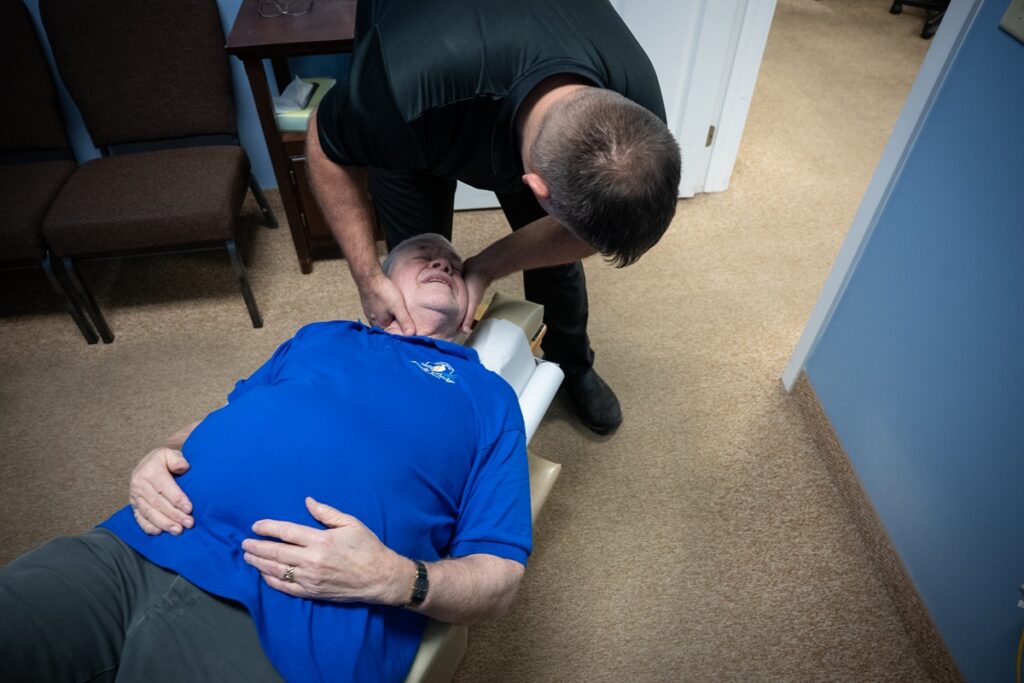
Chiropractic adjustments to the cervical and upper thoracic spine are often a central part of care for arm pain with a neurological origin. By gently restoring proper alignment to the vertebrae, these adjustments can relieve pressure on the affected nerve roots and allow signals to travel more freely. Research published in sources such as the Spine Journal and supported by organizations like the American Chiropractic Association suggests that spinal manipulation can be an effective component of conservative care for radicular arm symptoms.
Beyond adjustments, care at Catalyst Chiropractic And Rehab in Blaine, MN may also incorporate soft tissue therapies, rehabilitative exercises, and guidance on posture and ergonomics. The combination of these approaches addresses both the structural issue and the contributing lifestyle factors that may be keeping the problem in place.
Practical Tips for Relief at Home
While professional evaluation is always the gold standard for arm pain, there are thoughtful steps you can take at home to support your recovery and reduce strain on your neck, shoulder, and arm.
Ergonomics matter more than most people realize. If you work at a computer, your monitor should be at eye level so your neck isn’t tilting forward or downward for hours at a time. Your keyboard and mouse should be positioned so your elbows are bent at roughly 90 degrees and your wrists are neutral — not bent up or down. Small adjustments to your workspace setup can dramatically reduce repetitive stress on the structures that feed into your arm.
Frequent movement breaks are essential. Even the most ergonomically perfect workstation becomes a problem when you sit in one position for six hours straight. Setting a reminder to stand, walk, and gently move your neck and shoulders every 30 to 45 minutes can make a meaningful difference over time.
Sleep position is another factor that often goes overlooked. Sleeping with your arm raised above your head, or sleeping on a pillow that doesn’t support the natural curve of your neck, can aggravate nerve compression night after night. A supportive cervical pillow and a neutral sleeping position — ideally on your back or side — can reduce nighttime strain.
Staying hydrated is something Dr. Bob Vaughn often emphasizes with patients at Catalyst Chiropractic And Rehab. The intervertebral discs in your spine are largely composed of water, and adequate hydration helps them maintain their height and cushioning capacity. While hydration alone won’t resolve a disc problem, it is a meaningful part of overall spinal health.

When to See a Chiropractor for Arm Pain
Mild, occasional arm soreness after a workout or a long day of physical work often resolves on its own within a few days. But there are specific signs that suggest it’s time to book an evaluation rather than wait it out.
If your arm pain has lasted more than one to two weeks without improvement, or if it’s progressive — meaning it’s getting worse rather than better — that’s a clear signal to seek professional care. Tingling, numbness, or weakness in the arm or hand should always be evaluated promptly, as these symptoms suggest nerve involvement that may worsen without intervention.
Pain that radiates from the neck or upper back down into the arm, especially with neck movements, is a hallmark presentation for chiropractic evaluation. Dr. Bob Vaughn and the team at Catalyst Chiropractic And Rehab in Blaine, MN are experienced in identifying these patterns and determining whether chiropractic care is appropriate or whether a referral to another provider is the right next step.
There are also red flags that warrant immediate medical attention rather than a chiropractic visit. If you experience severe arm pain following trauma or a fall, sudden loss of strength in both arms, difficulty with bladder or bowel control alongside arm symptoms, or chest pain radiating into the left arm, please seek emergency care right away. A responsible chiropractor will always help you determine whether your situation is appropriate for conservative care or requires urgent medical evaluation.
Symptom or Pattern |
Possible Cause |
Recommended Action |
|---|---|---|
|
Aching from shoulder to elbow after computer work |
Repetitive strain, poor ergonomics |
Ergonomic adjustment + chiropractic evaluation |
|
Tingling or numbness in specific fingers |
Cervical nerve root compression |
Prompt chiropractic evaluation |
|
Pain that worsens when turning the head |
Cervical spine involvement |
Chiropractic evaluation and spinal assessment |
|
Elbow pain with gripping activities |
Tennis elbow or golfer’s elbow |
Soft tissue therapy + rehabilitative exercise |
|
Arm pain with chest pain (left side) |
Possible cardiac event |
Seek emergency medical care immediately |
|
Arm weakness and numbness after trauma |
Fracture, disc injury, or nerve damage |
Emergency medical evaluation |
Myths vs. Facts About Arm Pain and Chiropractic Care
Myth: Arm pain always means something is wrong with the arm itself.
Fact: A significant portion of arm pain originates in the cervical spine or shoulder, not within the arm tissue itself. The nerves supplying the arm begin in your neck, so compression or irritation at that level can produce very convincing arm symptoms — even when the arm appears structurally normal.
Myth: If the pain goes away on its own, there’s nothing to worry about.
Fact: Pain that resolves temporarily doesn’t always mean the underlying cause has been corrected. Many patients at Catalyst Chiropractic And Rehab describe years of intermittent arm pain that gradually became more frequent and severe. Addressing the root cause early is generally a far better strategy than waiting for symptoms to become chronic.
Myth: Chiropractic adjustments to the neck are dangerous and should be avoided.
Fact: Cervical adjustments performed by a licensed, trained chiropractor are considered a safe and effective component of conservative care for neck-related arm pain. Dr. Bob Vaughn performs thorough evaluations before recommending any adjustment and tailors the approach to each individual patient’s needs and comfort level.
Myth: Arm pain from nerve compression always requires surgery.
Fact: Many cases of nerve-related arm pain respond well to conservative care, including chiropractic adjustments, soft tissue therapy, and rehabilitative exercises. Surgery is generally considered only when conservative approaches have been exhausted or when there is progressive neurological deterioration. Evidence from organizations like the NIH and the American College of Physicians supports beginning with non-invasive care for many musculoskeletal conditions.
Myth: Resting the arm completely is the best way to heal it.
Fact: While avoiding aggravating activities is wise, complete rest is rarely the most effective approach and can actually delay recovery by allowing muscles to weaken and stiffen. Guided movement, specific rehabilitative exercises, and gentle mobilization are generally more effective at restoring function than prolonged inactivity.
Final Thoughts: You Don’t Have to Live With Arm Pain
Arm pain has a way of quietly lowering your quality of life — affecting your work, your sleep, your hobbies, and your mood. The good news is that many of the most common causes of arm pain respond well to conservative, non-invasive care. You don’t have to jump straight to medications or surgery to find relief.
Here in Blaine, MN, the team at Catalyst Chiropractic And Rehab is committed to helping members of our community understand what’s driving their pain and finding individualized paths toward recovery. Dr. Bob Vaughn approaches every patient with curiosity, care, and a genuine commitment to finding real answers — not just temporary relief. If arm pain has been holding you back, we’d love the opportunity to help you figure out what’s going on and what can be done about it. You deserve to feel well and move freely.
Frequently Asked Questions About Arm Pain and Chiropractic Care
Can a chiropractor help with arm pain that comes from the neck?
Yes — cervicogenic arm pain (arm pain originating from the cervical spine) is one of the conditions chiropractic care is well-suited to address. By restoring proper spinal alignment and reducing nerve root irritation, chiropractic adjustments can help relieve symptoms that radiate into the arm. Dr. Bob Vaughn evaluates each patient individually to confirm whether the cervical spine is the source of the arm symptoms.
How long does it take for chiropractic care to help with arm pain?
The timeline varies depending on the severity and duration of the condition, the underlying cause, and the individual patient’s overall health. Some patients notice improvement within a few visits, while others with more complex or long-standing issues may require a longer course of care. A realistic progress discussion is something Dr. Bob Vaughn has with every patient at the outset of care.
Is tingling in the fingers a serious symptom?
Tingling in the fingers can indicate nerve involvement and should not be dismissed, especially if it’s persistent, progressive, or accompanied by weakness. It’s not always an emergency, but it is a sign that a professional evaluation is warranted. The chiropractors at Catalyst Chiropractic And Rehab in Blaine, MN can help determine whether the symptom is neurological and whether chiropractic care or a medical referral is appropriate.
Can chiropractic care help with tennis elbow?
Evidence suggests that chiropractic care, including soft tissue therapies and rehabilitative guidance, can be a helpful component of conservative management for lateral epicondylitis (tennis elbow). Treatment typically focuses on reducing soft tissue tension, improving joint mechanics, and addressing any contributing postural or ergonomic factors. Results vary by individual, and a thorough evaluation helps set realistic expectations.
Do I need a referral to see a chiropractor for arm pain?
In most cases, you do not need a physician referral to schedule an appointment with a chiropractor. Catalyst Chiropractic And Rehab in Blaine, MN welcomes patients who self-refer, and Dr. Bob Vaughn will conduct a comprehensive evaluation to determine the most appropriate course of care — including referral to another provider if that’s what’s needed.
What should I expect at my first chiropractic visit for arm pain?
Your first visit will typically include a detailed health history intake, a discussion of your symptoms and how they started, and a physical examination that may include orthopedic tests, range of motion assessment, and neurological screening. From there, Dr. Bob Vaughn will explain his findings and discuss care options so you can make an informed decision about moving forward.
TL;DR — Key Takeaways
-
Arm pain frequently originates in the cervical spine, not the arm itself — making a spinal evaluation an important step in finding the true cause.
-
Tingling, numbness, and weakness in the arm or hand suggest nerve involvement and should be evaluated by a qualified professional rather than ignored.
-
Chiropractic care at Catalyst Chiropractic And Rehab in Blaine, MN offers a non-surgical, drug-free approach to addressing the root causes of arm pain.
-
Ergonomics, movement breaks, sleep position, and hydration are all practical factors that support recovery from arm pain alongside professional care.
-
Dr. Bob Vaughn conducts thorough evaluations to determine whether chiropractic care is appropriate or whether another type of provider is the right next step.